Essential tree removal guidance for Delaware County homeowners covering safety practices, timing, and professional considerations.
Share:
Summary:
Not every tree problem requires complete removal, but some situations leave you with no other choice. Dead or dying trees pose immediate safety risks, especially during Delaware County’s intense spring and summer storms. These compromised trees can fall without warning, potentially crushing cars, damaging homes, or worse—injuring someone you care about.
Disease is another major factor. Trees infected with oak wilt, emerald ash borer, or other common Pennsylvania tree diseases often can’t be saved and become hazards to nearby healthy trees. Sometimes the issue isn’t health but location—trees growing too close to your foundation, power lines, or septic system may need removal to prevent expensive structural damage down the road.
The key to safe tree removal starts with recognizing warning signs before an emergency strikes. Many Delaware County homeowners don’t realize their trees are in trouble until it’s too late. Look for obvious red flags like large dead branches, missing bark, mushrooms growing at the base, or a noticeable lean that wasn’t there before.
Cracks in the trunk are particularly concerning, especially if they extend deep into the wood. After storms, check for lifted soil around the root system—this indicates the tree’s anchor system has been compromised. Trees with multiple trunks splitting from a single point are also prone to failure, particularly during high winds.
Don’t ignore subtle changes either. If a tree that normally leafs out fully in spring suddenly shows sparse foliage, or if you notice an unusual amount of dead twigs and small branches beneath the canopy, these could signal internal decay or disease. The sooner you identify these issues, the more control you have over the removal process and timing.
Professional arborists use specialized tools to assess tree health that aren’t visible to the untrained eye. We can detect internal rot, measure the extent of root damage, and evaluate structural integrity in ways that prevent surprise failures. This assessment becomes crucial for insurance purposes too—many policies require professional documentation that a tree posed a genuine hazard before they’ll cover removal costs.
Tree removal ranks among the most dangerous DIY projects a homeowner can attempt. We’ve seen that the three leading causes of tree removal injuries are falls, electrocution, and being struck by falling trees or branches. These aren’t minor accidents—they often result in permanent disability or death.
The equipment required for safe tree removal goes far beyond a chainsaw and ladder. We use specialized rigging systems, cranes for controlled dismantling, and safety gear including harnesses, helmets, and cut-resistant clothing. We understand how to calculate falling trajectories, account for wind conditions, and plan escape routes before making the first cut.
Power lines present a particularly deadly hazard in residential areas. Even if lines appear to be a safe distance away, trees can shift unexpectedly during removal, and falling branches can travel much farther than anticipated. Contact with electrical lines can be fatal, and the legal liability for damage to utility infrastructure can cost tens of thousands of dollars.
Weather conditions play a crucial role in removal safety. Wind, rain, or ice can turn a manageable removal into a catastrophic situation. We monitor weather forecasts and postpone work when conditions aren’t optimal. We also understand how different tree species react to various cutting techniques—knowledge that prevents dangerous kickback, binding, and unpredictable falling patterns.
The cleanup phase carries its own risks. Homeowners often underestimate the volume of debris a single tree generates and the proper techniques for handling it safely. We have the equipment to chip branches efficiently and remove large trunk sections without damaging your property or injuring bystanders.
Want live answers?
Connect with a V. Serrano's Landscaping expert for fast, friendly support.
Professional tree removal follows a systematic approach that prioritizes safety and property protection. The process begins with a thorough assessment of the tree, surrounding structures, and potential hazards. We evaluate the tree’s condition, plan the removal strategy, and obtain any necessary permits required by local Delaware County municipalities.
The actual removal method depends on the tree’s size, location, and surrounding constraints. Simple removals involve felling the entire tree in one piece when sufficient space allows. More complex situations require sectional removal, where the tree is dismantled piece by piece from the top down to prevent damage to nearby structures, landscaping, or utility lines.
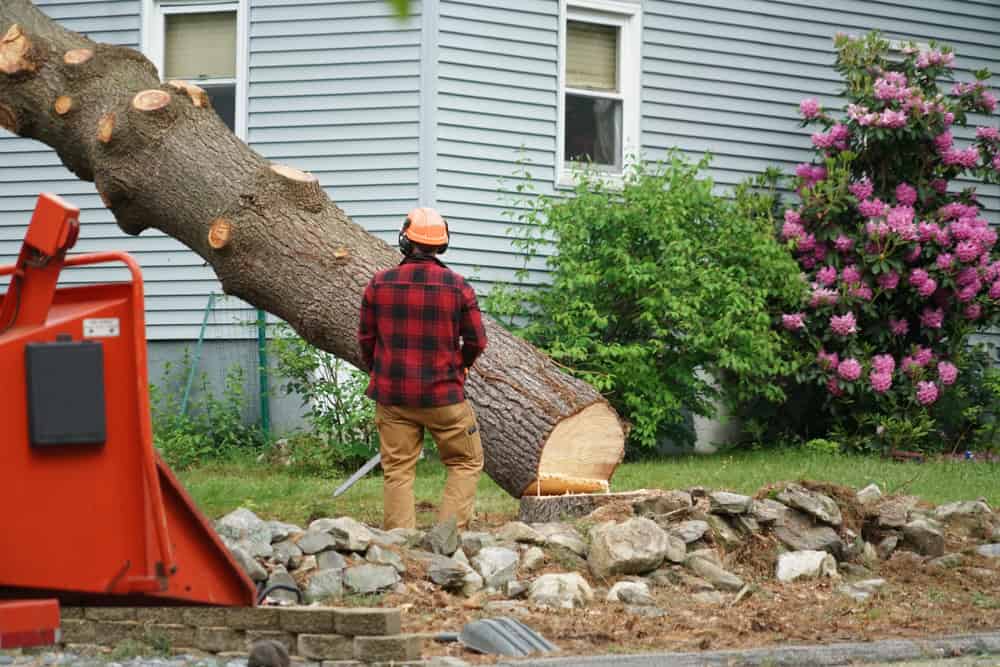
Felling involves cutting a tree at its base and allowing it to fall in a predetermined direction. This method works best for trees in open areas with adequate clearance. We make precise cuts including a directional notch and back cut to control the tree’s fall path. We calculate the tree’s height, lean, and weight distribution to ensure it lands exactly where intended.
Sectional removal becomes necessary when space is limited or structures are nearby. This technique involves climbing the tree or using bucket trucks to access the upper portions, then systematically removing branches and trunk sections. Each piece is carefully lowered using ropes and rigging systems to prevent damage to the property below.
Crane-assisted removal represents the most controlled method for challenging situations. Large cranes can lift and place tree sections with precision, making it possible to remove trees in extremely tight spaces or over valuable landscaping. This method is often cost-effective despite the equipment expense because it dramatically reduces labor time and eliminates the risk of property damage.
The choice of removal technique affects both cost and timeline. Simple felling can often be completed in a few hours, while complex sectional removals may require a full day or more. Weather conditions, tree species, and seasonal factors also influence the approach. For example, deciduous trees are often easier to remove in winter when they’re dormant and have no leaves to catch wind.
Our crews coordinate their efforts to maintain safety throughout the process. One team member operates the saw while others manage rigging, direct falling pieces, and maintain clear escape routes. Communication systems ensure everyone stays aware of changing conditions and potential hazards as the removal progresses.
We begin with a comprehensive consultation and written estimate. We’ll assess not just the tree in question but also surrounding vegetation, structures, and access routes. This evaluation helps us plan the safest, most efficient removal approach while identifying any potential complications that could affect pricing or timeline.
Before work begins, we establish safety perimeters and protect valuable landscaping or structures that could be affected by the removal process. We lay down protective mats to prevent soil compaction and equipment damage to your lawn. All utilities are located and marked to prevent accidental damage during the removal process.
The actual removal day involves coordinated teamwork with clear communication protocols. We oversee the entire process, making critical decisions about cutting sequences and safety measures. We carry comprehensive insurance coverage and provide documentation for any insurance claims you may need to file.
Cleanup is typically included in our tree removal services. This means hauling away all debris, grinding stumps to below ground level if requested, and leaving your property in clean condition. We can also provide wood chips for mulching or firewood if you prefer to keep some of the material.
We also handle the paperwork side of tree removal. We can assist with permit applications where required, provide documentation for insurance claims, and offer guidance on replacement plantings if desired. This comprehensive approach saves homeowners significant time and stress while ensuring all legal and safety requirements are met.
We stand behind our work with guarantees and maintain ongoing relationships with our clients. We can provide advice on caring for your remaining trees and alert you to potential problems before they become emergencies. This long-term partnership approach helps protect your property investment and ensures you have trusted experts to call when tree issues arise.
Tree removal is never a decision to take lightly, but when safety or property protection is at stake, acting quickly with professional help is essential. The practices we’ve covered—from identifying warning signs to understanding professional removal processes—give you the knowledge to make informed decisions about your Delaware County property.
Remember that the cheapest option isn’t always the best value when it comes to tree removal. Professional services bring expertise, proper equipment, insurance coverage, and peace of mind that DIY approaches simply can’t match. When you’re ready to address tree concerns on your property, we have the experience and local knowledge to handle your tree removal needs safely and efficiently.
Your trees are valuable assets that deserve professional care, whether that means preservation through proper maintenance or safe removal when necessary. Taking action before problems become emergencies protects both your investment and your family’s safety.
Article details:
Share:
Continue learning: